
The question "do ice baths burn fat" gets searched thousands of times every month, and the answers online range from cautiously optimistic to wildly overhyped. Here's the honest answer: yes, cold water immersion can contribute to fat burning — but the mechanism is more interesting than most people explain, and the results are far more nuanced than the hype suggests. This article breaks down the actual biology, the real calorie numbers, and what you need to do to make cold exposure work as part of a weight loss plan.
What Your Body's Fat Actually Does
Most people think of body fat as a single thing you want less of. But the body has distinct types of fat that play very different roles, and understanding that split is key to understanding why cold exposure matters at all.
White adipose tissue (WAT) is what most people mean when they say "body fat." It stores excess energy, cushions organs, and insulates the body. Too much of it — especially deep around the organs — raises the risk of metabolic disease.
Brown adipose tissue (BAT), on the other hand, burns calories instead of storing them. It's packed with mitochondria (the energy-burning machinery of cells), and its entire job is to generate heat. Newborns have a lot of it. Adults retain smaller depots, mostly around the neck, collarbone, and upper back.
Beige (or "brite") fat sits in between. It looks and behaves like white fat under normal conditions, but under the right stimuli — cold exposure being one of them — it can take on brown fat-like properties and start burning energy.
The reason cold exposure gets linked to fat loss is simple: it activates brown fat. And more active brown fat means more calories burned at rest.

How Cold Water Makes Your Body Burn Fat
When you lower yourself into cold water, your body reads it as a threat to survival. Core temperature must be maintained, and your nervous system responds fast.
Here's what happens step by step:
- Cold receptors in your skin fire immediately, sending signals to the hypothalamus — the brain's thermostat.
- The sympathetic nervous system kicks in, triggering the release of norepinephrine (also called noradrenaline).
- Norepinephrine activates brown fat, signaling it to start producing heat through a process called non-shivering thermogenesis (NST). The brown fat cells burn fatty acids to generate warmth — without any muscle movement.
- Shivering thermogenesis runs alongside: your muscles contract rapidly to generate heat, burning both glucose and fat in the process.
- Irisin, a hormone released during both exercise and cold exposure, has been shown in animal studies to help convert white fat into beige fat. Whether this effect translates meaningfully to humans is still being studied, but the early signals are interesting.
One thing worth knowing: the calorie-burning effect doesn't stop when you step out of the tub. Your body continues generating heat while it re-warms, and metabolic rate can stay elevated for an hour or more after the session ends.

What Research Shows
The research on cold water immersion and fat loss is real, but it's not as clean as the wellness industry makes it sound.
What the studies support:
- Cold exposure activates BAT in adult humans. This is well established.
- Regular cold exposure can increase BAT activity over time, which raises resting energy expenditure.
- Cold water immersion appears to improve insulin sensitivity and glucose regulation — a meaningful benefit for metabolic health and weight management.
- Some studies on winter swimmers show notably higher 24-hour energy expenditure compared to matched controls, even when resting in warm conditions.
Where the evidence gets thinner:
- Most studies are short-term (days to weeks), conducted in controlled lab conditions, and use small sample sizes.
- The degree of fat loss attributed specifically to cold exposure — separate from other lifestyle factors — is hard to isolate.
- Results vary significantly between individuals, depending on genetics, existing BAT levels, and how much cold the subjects were actually exposed to.
The honest takeaway: cold therapy is a legitimate tool with measurable physiological effects. It is not a shortcut. Learn more about the full picture of what ice baths do for the body on the Garvnive Science page, which walks through the key mechanisms behind cold water immersion.
How Many Calories Does an Ice Bath Actually Burn?
This is where things get deflating for anyone hoping cold plunges are a secret weapon.
A typical ice bath session burns roughly 50 to 200 extra calories, depending on:
- Water temperature (colder = more thermogenic demand)
- Duration (longer exposure = more heat production required)
- Body composition (more body mass = more heat to maintain)
- Individual BAT levels (more active BAT = more efficient heat generation)
The table below puts that into perspective:
| Activity | Duration | Approximate Calories Burned |
|---|---|---|
| Ice bath (10–15°C) | 10 min | 50–100 kcal |
| Brisk walk | 30 min | 120–150 kcal |
| Moderate cycling | 30 min | 200–300 kcal |
| HIIT workout | 30 min | 300–450 kcal |
| Strength training | 45 min | 200–350 kcal |
The numbers tell a clear story. Cold exposure adds to your daily energy expenditure, but it's a modest addition — not a replacement for movement. What it can do meaningfully is raise your resting metabolic rate slightly over time, and improve the hormonal conditions that make fat loss easier.
One thing that often gets overlooked: some people eat more after cold exposure to compensate for the calorie burn. If that's you, the net benefit disappears. Awareness of this is half the battle.
To understand how session timing and duration affect outcomes, Garvnive's guide on how long to ice bath goes into detail on structuring your sessions.
Can Ice Baths Target Belly Fat Specifically?
Spot reduction — the idea that you can burn fat from a specific part of your body through targeted exercise or treatment — is largely a myth. Ice baths are no exception.
Cold exposure increases whole-body energy expenditure. It does not preferentially melt fat from your abdomen.
That said, there's a more interesting indirect pathway: brown fat activation improves insulin sensitivity, which reduces the amount of glucose that gets converted to fat and stored viscerally (around the organs). People with higher insulin sensitivity tend to accumulate less visceral fat over time, even with the same diet as those with poorer sensitivity.
So while you can't use ice baths to "target" your belly, consistently improving your insulin response through cold exposure — combined with good nutrition and movement — creates metabolic conditions that are less favorable to visceral fat accumulation. That's a meaningful, if indirect, benefit.
Why Some People See Better Results Than Others
You've probably seen two types of people in online cold plunge communities: those who swear by dramatic results, and those who do it faithfully and notice almost nothing on the scale. The gap comes down to biology.
| Factor | Effect on Cold-Exposure Fat Burning |
|---|---|
| Age | BAT declines with age; older adults see less thermogenic response |
| Sex | Women generally have more BAT than men, but hormonal factors complicate outcomes |
| Genetics | BAT density and activation efficiency vary significantly between individuals |
| Fitness level | Trained individuals have higher irisin levels; better white-to-beige fat conversion potential |
| Body fat percentage | Those with higher body fat often have less active BAT per unit of mass |
| Cold adaptation | With regular exposure, the body becomes more efficient — which can mean less shivering (and fewer calories burned per session) over time |
This last point is important. As your body adapts to cold, the immediate thermogenic response decreases. That's not a failure — it means your thermoregulation has improved — but it does mean you may need to progressively lower the temperature or extend duration to maintain the same stimulus.
If you're new to cold plunges, this overview of ice bath benefits helps set realistic expectations from the start.
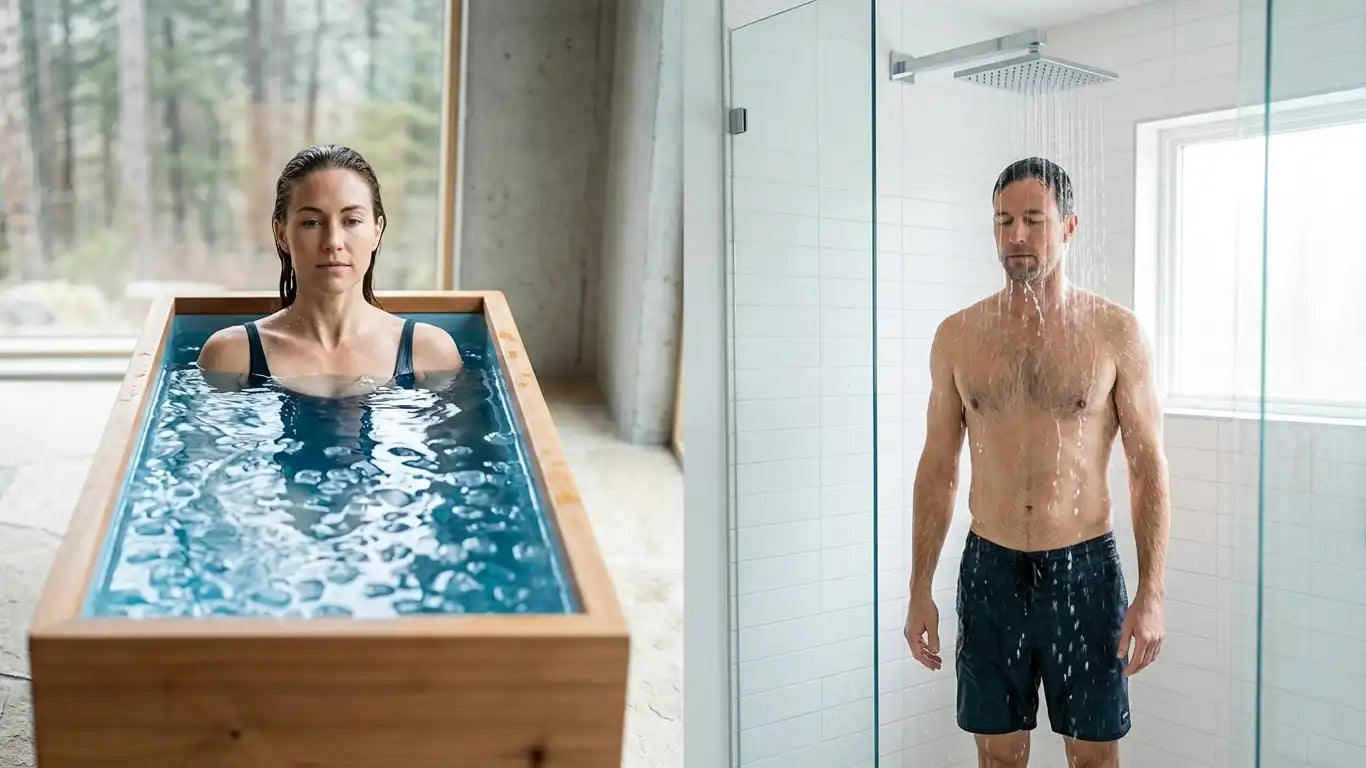
Ice Bath vs Cold Shower
For people without a dedicated plunge tub, the obvious question is whether a cold shower delivers the same benefits.
The short answer: cold showers work, but less effectively.
Full immersion lowers your core body temperature faster and more thoroughly than a shower. The larger surface area of contact and the thermal conductivity of still water (versus flowing water hitting parts of your skin) creates a stronger thermoregulatory demand — which means more norepinephrine release and more BAT activation.
| Ice Bath / Cold Plunge | Cold Shower | |
|---|---|---|
| Core temp drop | Significant | Mild to moderate |
| BAT activation | High | Low to moderate |
| Calorie burn per session | 50–200 kcal | 10–50 kcal |
| Norepinephrine spike | Strong | Moderate |
| Accessibility | Requires tub/equipment | Very accessible |
| Entry point for beginners | Harder | Easier |
Cold showers are a genuine starting point and carry real benefits on their own. But if fat burning and metabolic adaptation are your goals, full immersion is meaningfully more effective.
A practical approach: use cold showers to build tolerance, then transition to immersion as your body adapts. For guidance on optimal temperature ranges when you make that transition, Garvnive's breakdown of how cold an ice bath should be is a good reference.

How to Make Ice Baths Work for Fat Loss
Cold exposure is most effective when it's one part of a coordinated approach — not a standalone solution.
Ice bath protocol for metabolic benefits:
- Temperature: 10–15°C (50–59°F) is the effective range. Below 10°C is harder to sustain and adds risk without proportional benefit.
- Duration: Start at 2–3 minutes. Work toward 8–12 minutes per session as tolerance builds.
- Frequency: 3–4 times per week is enough to drive adaptation. Daily is fine, but not necessary.
- Timing: Morning sessions or post-workout (allow 2–4 hours gap after strength training to avoid blunting muscle protein synthesis).
- After the session: Let your body re-warm naturally where possible. Active rewarming (via shivering and movement) burns more calories than immediately jumping in a hot shower.
Supporting habits that compound the effect:
Nutrition: A modest caloric deficit paired with adequate protein (1.6–2.2g per kg of body weight) preserves muscle while losing fat. Avoid large meals immediately after cold exposure, as appetite can increase.
Exercise: Resistance training increases irisin levels, which supports brown fat conversion. Combining strength work with regular cold plunges creates complementary metabolic signals.
Sleep: Poor sleep raises cortisol and disrupts hormones that regulate appetite and fat storage. Ice baths have been shown to improve sleep quality in some people — read more on how cold therapy affects mood and stress hormones here.
Stress management: Chronic cortisol drives visceral fat storage. Managing psychological stress is at least as important as cold exposure when targeting body composition.
If you're concerned about safety before starting, especially with pre-existing health conditions, this article on ice bath risks covers what to watch out for.
Summary
Ice baths do burn fat — through brown fat activation, thermogenesis, and improved insulin sensitivity — but the effect is modest compared to diet and exercise. A single session burns roughly 50 to 200 extra calories, and the metabolic benefits compound over weeks of consistent practice. Results vary based on age, sex, genetics, and fitness level. Cold showers offer a gentler entry point but produce a smaller thermogenic response than full immersion. The strongest case for ice baths in a fat-loss context isn't the calorie count per session — it's the downstream metabolic improvements: better insulin function, reduced inflammation, and hormonal conditions that make the body more efficient at using stored fat as fuel.
FAQ
How long do you need to stay in an ice bath to burn fat?
Most of the thermogenic response kicks in within the first 5 minutes of cold immersion. Sessions of 8–12 minutes at 10–15°C appear to be the practical sweet spot for metabolic benefit — long enough to drive norepinephrine release and brown fat activation, short enough to stay safe. You don't need to push beyond 15 minutes, and doing so adds hypothermia risk without meaningful extra calorie burn. See Garvnive's complete guide to ice bath duration for a personalized breakdown.
Do ice baths burn more fat when done in the morning vs evening?
Morning sessions may have a slight edge for metabolic purposes: they raise core body temperature and norepinephrine levels early in the day, potentially sustaining a higher metabolic rate for several hours. Evening ice baths can disrupt sleep for some people due to the stimulating effect of norepinephrine. That said, consistency matters more than timing — the best time is the one you'll actually do regularly.
Can ice baths reduce belly fat specifically?
Not directly. Fat burning from cold exposure is a systemic process — your body decides where to pull energy from based on hormonal cues and genetics, not the location of the cold stimulus. However, by improving insulin sensitivity and reducing cortisol over time, regular cold exposure can create conditions less favorable to visceral (belly) fat accumulation.
How many times a week should I do ice baths for weight loss?
Three to four sessions per week is enough to drive meaningful brown fat adaptation and metabolic improvement. More than five sessions per week doesn't appear to produce proportionally greater benefits, and it may allow less time for recovery. Prioritize consistency over frequency.
Do ice baths interfere with muscle growth if I'm trying to lose fat and build muscle at the same time?
Timing matters here. Immersing in cold water within 1–2 hours of strength training may blunt muscle protein synthesis, reducing the anabolic response from the workout. If you're training for both muscle gain and fat loss, schedule ice baths in the morning (separate from evening training), on rest days, or at least 3–4 hours after a strength session.
Share:
Do Ice Baths Help You Lose Weight? The Science Behind Cold-Induced Fat Loss
Do Ice Baths Actually Work? A No-Fluff Guide to Cold Water Therapy