
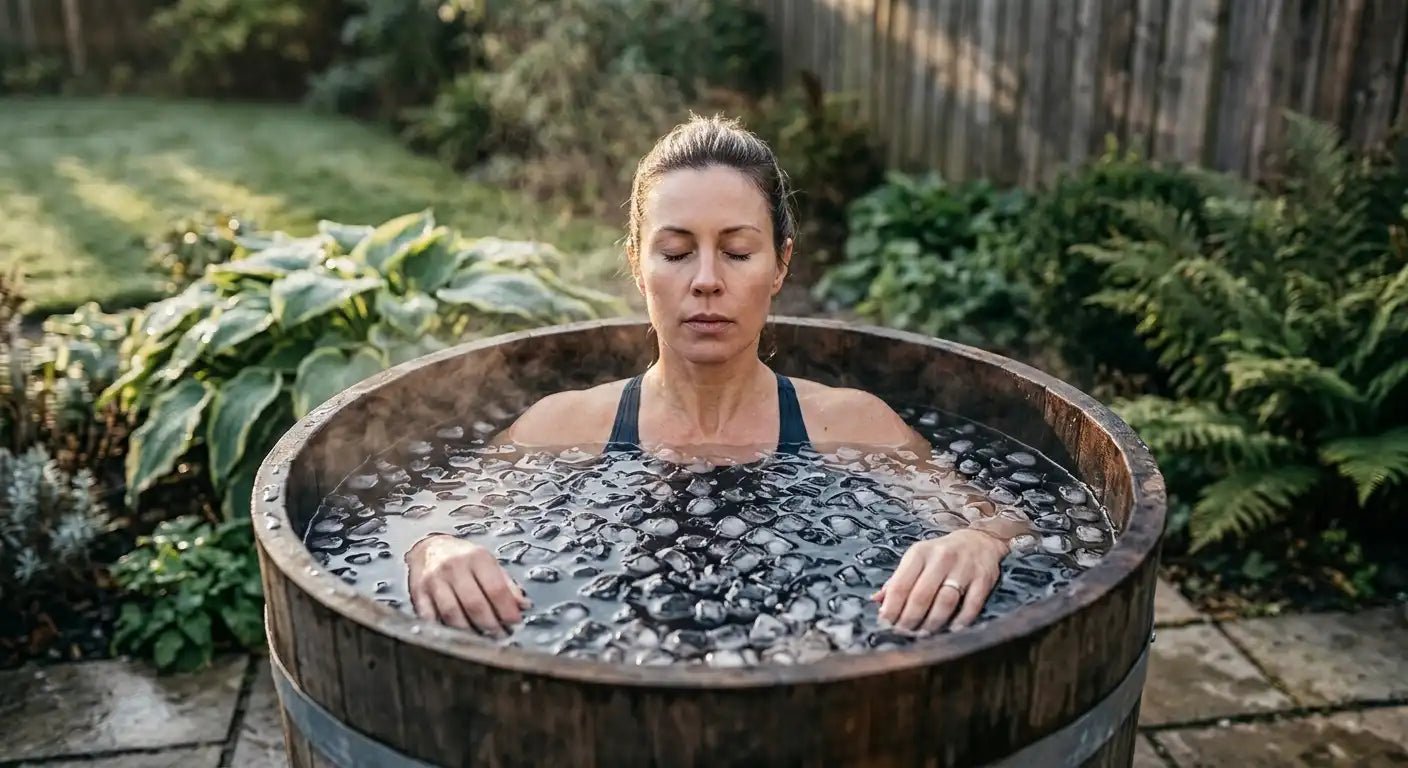
For a first ice bath, do not treat a fixed number of minutes as a target you have to endure. Cleveland Clinic advises beginners to limit a session to a minute or two. This is practical starting guidance, not a scientifically established optimal dose or a universal safety guarantee. Your health and the water conditions matter, and you can stop earlier.
How Long Should Your First Ice Bath Be?
A short starting suggestion is not a minimum you must complete. You do not need to stay until a timer ends for your first attempt to count. If cold-water immersion is not appropriate for you, choosing a shorter time does not make it appropriate.
There is no automatic next step from a first session to longer sessions. Becoming accustomed to the sensation of cold does not establish how long you can safely remain in the water.
Why There Is No Universal Beginner Time
Water temperature changes the exposure, and people differ in their health and response to cold. A duration tested under particular research conditions is not an individual prescription. Neither a study protocol nor another person's routine establishes the right time for you. For more on water temperature and how it relates to immersion time, see our guide to ice bath temperature.
For the broader discussion beyond a first attempt, see our general ice bath duration guide. A suggested time should never override a reason to stop.
What Matters More Than Chasing a Timer
Measure the water with a suitable thermometer rather than estimating its temperature from the number of ice bags. Colder water is not automatically a better choice, and this guide does not prescribe a temperature range for every beginner.
Before trying cold-water immersion, consult a qualified healthcare professional if you have a heart condition, a significant health concern, are pregnant, or are unsure whether it is appropriate for you. The absence of a known condition is not a guarantee of safety.
How to Enter a Cold Plunge More Safely
Cold shock can happen soon after entry, rather than only after a long session. The American Heart Association describes how sudden cold-water immersion can rapidly affect breathing, heart rate, and blood pressure. A short planned session does not remove that initial risk.
Enter gradually rather than jumping in. RNLI cold-water guidance emphasizes gradual entry and access to a safe exit. Its guidance concerns outdoor dipping; open water adds hazards and should not be treated as equivalent to a controlled home ice bath.
Breathe normally. The Wim Hof Method's official FAQ explicitly distinguishes normal breathing during cold-water exposure from its breathing exercise, which should not be performed in water. Fainting around water can be dangerous. Do not use breath-holding or deliberate hyperventilation as part of your plunge.
When to Get Out
Stop if something feels wrong. Difficulty controlling your breathing, dizziness, confusion, loss of coordination, persistent numbness, or severe discomfort are reasons to leave the water. They are not a checklist for diagnosing yourself with hypothermia or frostbite.
Do not wait for every warning sign or for a timer to finish. If you cannot get out safely, call for help immediately. Severe or continuing symptoms need urgent medical attention. Our ice bath risks guide provides additional context.
After Your First Ice Bath
Dry off, remove wet clothing, and put on warm, dry layers. These basic warming steps are included in RNLI's guidance. There is no fixed recovery countdown or mandatory shower-waiting interval in this guide.
A first session does not commit you to a schedule or to staying longer next time. Consider whether cold-water immersion is appropriate for you before planning another attempt.
First Ice Bath FAQ
How Long Should I Stay in an Ice Bath for the First Time?
Cleveland Clinic's brief beginner guidance above is a practical suggestion, not a required minimum or a guarantee of safety. Individual health and water conditions matter more than completing a number.
What If I Want to Get Out Before the Timer Ends?
Get out. You do not need to endure discomfort to complete a session, and a timer is not permission to remain when something feels wrong.
Should Beginners Use Colder Water?
There is no need to chase the lowest temperature. Measure the water and do not assume that a colder setting is better or that a warmer setting guarantees safety.
How Do I Know When to Get Out?
Stop if you feel unwell, have difficulty controlling your breathing, or notice the warning signs above. Do not wait for a specific time or try to diagnose a condition before leaving.
Should I Do Wim Hof Breathing in an Ice Bath?
No. Breathe normally in the water. The Wim Hof breathing exercise is separate from cold-water immersion and should not be performed in water.
Share:
Are Ice Baths Healthy? What Science Says
How to Size a Cold Plunge Chiller for Your Setup